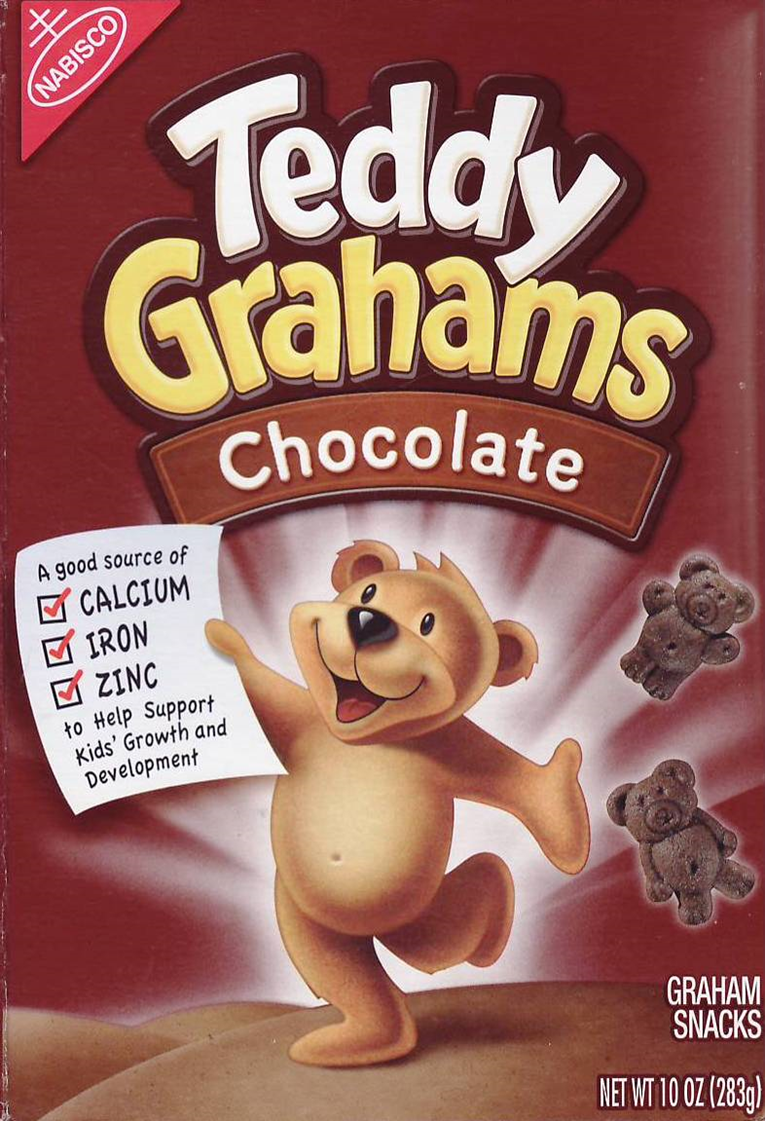
44 examples of nutrient claims on food labels
Nutrition content claims and health claims - Food Standards For example: 'calcium for healthy bones and teeth'. These claims are either based on one of the more than 200 pre-approved food-health relationships in the Standard, or a food-health relationship self-substantiated by the food business using the scientific method set out in the Standard. Factual Food Labels: Health Claims The terms that are used in this type of label is "free," "reduced," "high," and "low." These type of claims are only applicable to nutrients that have a % daily value established such as saturated fat, added sugars, and vitamins and minerals. An example of this type of claim is "low/less sugar."
Nutrient content claim examples - Nutrient content claims: reference ... Nutrient content claim example - fibre claims Example - High source of fibre The following claim appears on a box of 6 muffins: "High source of wheat bran and oat bran". Each muffin contains 1.5 g of fibre from wheat bran and 3.5 g of fibre from oat bran per serving of stated size of 90 g.

Examples of nutrient claims on food labels
What Is or Isn't a Health Claim? - The Fermentation Association Nutrient claims are defined by the FDA to "describe the level of a nutrient in the product, using terms such as free, high, and low, or they compare the level of a nutrient in a food to that of another food, using terms such as more, reduced, and lite.". - A health benefit cannot be used interchangeably with a health claim. Understanding Food Labels - Nutrition: Science and Everyday Application As an example of an authorized health claim, a food that is low in sodium (per the FDA's definition of less than 140 mg per serving) can include the following claim on their packaging: "Diets low in sodium may reduce the risk of high blood pressure, a disease associated with many factors." 1 Understanding Food Labels and Health Claims - Nutrition Essentials There are three levels of health claims: A health claim is supported by scientific evidence. An example is "reduces heart disease." A qualified claim has supportive evidence, which is NOT definitely proven with scientific evidence. There is evidence to SUGGEST a health benefit, but there is no scientific evidence.
Examples of nutrient claims on food labels. Decoding the Nutrition Label: Health Claims and Nutrient ... - Unlock Food Below are examples of health claims you may find on some foods: A healthy diet rich in vegetables and fruit may help reduce the risk of some types of cancer. A healthy diet low in saturated and trans fat may reduce the risk of heart disease. Nutrition and health claims on labels and in food advertising Most of the permitted health claims relate to a specific ingredient or nutrient; some claims relate to a food, for example "dried plums contribute to normal bowel function" or "sugar-free chewing... Understanding Food Labels | The Nutrition Source | Harvard T.H. Chan ... For example, a bag of potato chips may advertise that it has 40% less fat and is cholesterol-free, suggesting it is a "healthy" food, when in reality even a "healthier" potato chip is still a high-calorie ultra-processed food offering little nutrition. Some terms are not yet regulated by the FDA such as " natural " or "multigrain." Comparative nutrient content claims - Food labels - Canadian Food ... Examples of comparative claims include: "3 grams more fibre than 1 slice of Brand X bread" "33% less sodium per x serving than our regular potato chips" Table of Contents Conditions for use of comparative nutrient content claims Comparative claims for vitamin and mineral nutrients Reformulated products and similar reference foods
Label Claims for Conventional Foods and Dietary Supplements Examples include simple percentage statements such as "40% omega-3 fatty acids, 10 mg per capsule," and comparative percentage claims, e.g., "twice the omega-3 fatty acids per capsule (80 mg) as in... Label Claims for Food & Dietary Supplements | FDA Types of Claims Definitions, Guidance, Regulatory Information, and Permitted Claims FDA Modernization Act of 1997 (FDAMA) Health and Nutrient Content Claims Health Claims That Meet Significant... Food Packaging Claims | American Heart Association There are three categories of claims defined by statute and/or FDA regulations that can be used on food and dietary supplement labels: health claims, nutrient content claims, and; structure/function claims. A "health claim" by definition has two essential components: A substance (whether a food, food component, or dietary ingredient) and Nutrient Claims on Food Labels | Home & Garden Information Center The label on a can of pears says there is "no added sugar." The words on a milk carton boast that it is "high in calcium." Certain breakfast cereals claim to be "high in fiber." "Lite" salad dressing and cookies with "fewer calories" also catch your eye. These are all nutrient content claims.
Structure/Function Claims | FDA In addition, they may characterize the means by which a nutrient or dietary ingredient acts to maintain such structure or function, for example, "fiber maintains bowel regularity," or "antioxidants... 7 fake claims on food nutrition labels that are affecting your diet Nutrition claim #2: Sugar-free. A lot of 'diet-friendly foods' proudly claim on their label that they contain no sugar and are still sweet or have 'great taste'. A closer look at their labels will show an addition of either honey or high fructose corn syrup, malt, dextrin or even sugar alcohols like maltitol or sorbitol. Nutrient Content Claims | FDA Nutrient Content Claims. See Claims That Can Be Made for Conventional Foods and Dietary Supplements for definitions of claims. Final Rule: Food Labeling: Nutrient Content Claims; Alpha-Linolenic ... Questions and Answers on Health Claims in Food Labeling | FDA An example of a qualified health claim is, "Scientific evidence suggests, but does not prove, that whole grains (three servings or 48 grams per day), as part of a low saturated fat, low cholesterol...

How not to be fooled by simple food labels
The 13 Most Misleading Food Label Claims 7. "Kosher" does not mean non-GMO. Genetically engineered ingredients are openly allowed in Kosher-certified foods. The Kosher certification does not involve testing for GMOs, and Kosher certifications are routinely found on foods containing GMOs. 8. "All Natural" doesn't mean anything at all.

Being fooled at the supermarket? 20 Claims on Food Labels Exposed! - Family Wellness HQ
Health Claims on Food Labels - Consumer Reports Specifically, grass-fed meat and dairy has a more healthful ratio of omega-6 polyunsaturated fatty acids to omega-3s. Too much omega-6 fat in your diet can cause inflammation, which may be a ...
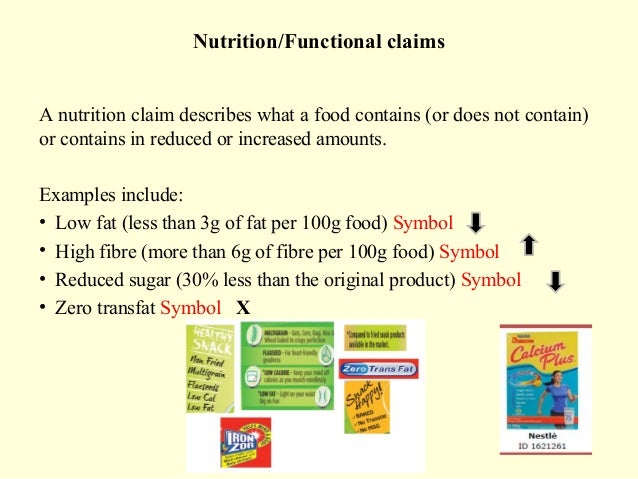
Nutritional labeling of food products
Nutrition and Health Claims in Food Labelling | Eufic This is the first piece of specific legislation to deal with nutrition and health claims. Its aims are: To ensure a high level of consumer protection by guarding against unsubstantiated, exaggerated or untruthful claims about foodstuffs. With the new legislation, consumers can rely on clear and accurate information on food labels, enabling them ...
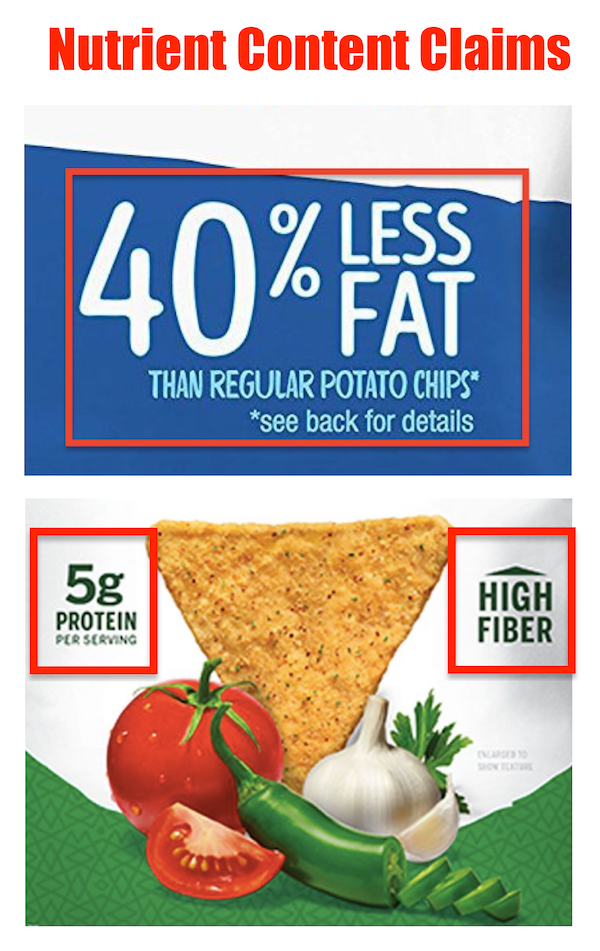
structure function claims — Blog — FDA Reader
What are Nutrient Content Claims on food labels ... - Nutritionist Pro™ Some examples of nutrient content claims are sugar-free, lean, light, and many other terms. Some Nutrient claims are about the content of certain nutrients and may state that the product is low in fat or a good source of calcium. ... Nutrient Content Claims on Food Labels. It is difficult not to become confused when reading food labels, and ...

Consumer Savvy: Reading Food Labels to Make Better Choices – Body Pep Talk
Factual Food Labels: Health Claims - 100% Online Health Claims. In 1990, the Nutrition Labeling and Education Act allowed claims that related a specific food component (e.g., oats) to lowered disease risk (e.g., reduced cholesterol) to be printed on the label of a food product. For example, if a company wants to place a health claim on their food packaging, such as "Heart Healthy," they ...

Limitation of (Food) Labels | Phytonutrients, Food labels, Nutrition facts
Introduction to Food Product Claims — FDA Reader A health claim describes a relationship between a food and a reduced risk of a disease or a health-related condition. This can be made in words, images (i.e. a heart), or a reference to a 3rd party certification. Example of a Health Claim: "Diets low in sodium may reduce the risk of high blood pressure, a disease associated with many factors."
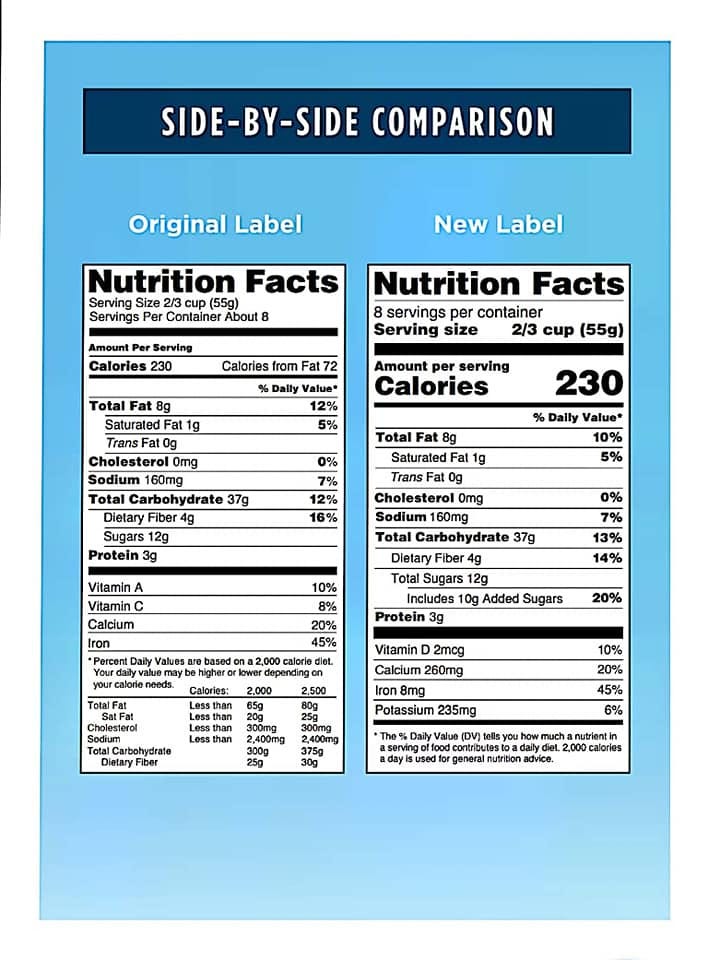
New Nutrition Facts Label for Processed Food — a tiny step forward
13 Misleading Food Label Claims and How Not to Be Tricked 1. Label Says "Sugar-Free". The Food and Drug Administration (FDA) provides guidelines for a variety of common food labels, including sugar-free. While the term suggests that products labeled this way would be completely free of sugar, they can actually contain up to 0.5 grams of sugar in a single serving size.
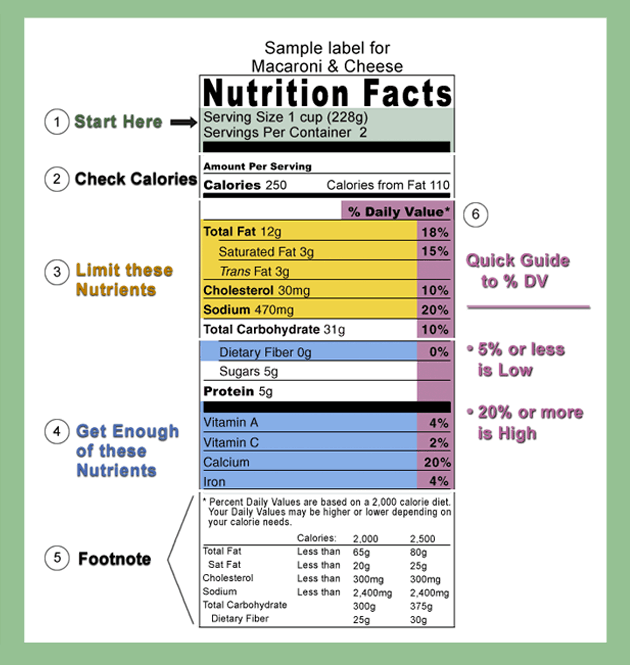
Why It Matters
Food Label Claims: What You Can and Can't Trust - WebMD For example, a label could say that getting enough calcium throughout your life, and having a balanced diet, may lower your chances of getting osteoporosis. Structure/function claims. These...

31 What Is A Health Claim On A Food Label - Labels Niche Ideas
Nutrient Content Claim vs Health Claim - LabelCalc Nutrient content claims, which are commonly used on food labels, either refer to the amount of a nutrient in a product or compare the levels of a nutrient in that food to a similar reference food. When referring to the amount of a nutrient in a product, words such as "low," "free," and "high" are often used.
Food Politics by Marion Nestle » Vitamins
How Food Packaging Claims Can Fool You - Consumer Reports Refined wheat flour is the first ingredient listed in both, and each serving has 80 calories and no fiber. In fact, the veggie crackers have 150 mg of sodium per serving compared with 105 in the ...

10.2 Food & Nutrients – Environmental Issues
Understanding Food Labels and Health Claims - Nutrition Essentials There are three levels of health claims: A health claim is supported by scientific evidence. An example is "reduces heart disease." A qualified claim has supportive evidence, which is NOT definitely proven with scientific evidence. There is evidence to SUGGEST a health benefit, but there is no scientific evidence.

NUTRITION INFORMATION SITES - Compiled by Betty C. Jung
Understanding Food Labels - Nutrition: Science and Everyday Application As an example of an authorized health claim, a food that is low in sodium (per the FDA's definition of less than 140 mg per serving) can include the following claim on their packaging: "Diets low in sodium may reduce the risk of high blood pressure, a disease associated with many factors." 1
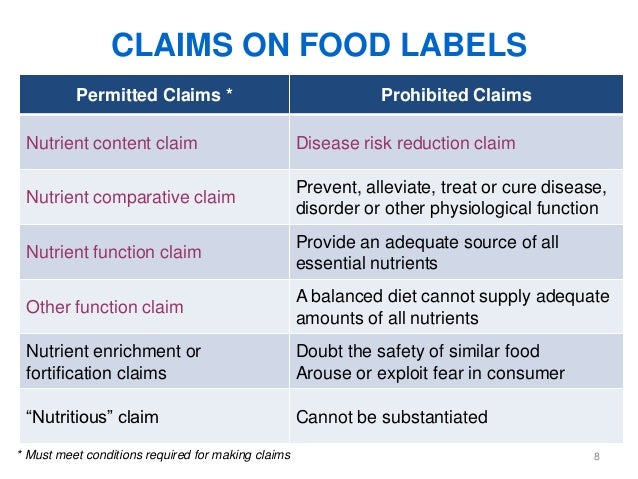
Nutrition Labeling & Claims Malaysia 2012
What Is or Isn't a Health Claim? - The Fermentation Association Nutrient claims are defined by the FDA to "describe the level of a nutrient in the product, using terms such as free, high, and low, or they compare the level of a nutrient in a food to that of another food, using terms such as more, reduced, and lite.". - A health benefit cannot be used interchangeably with a health claim.
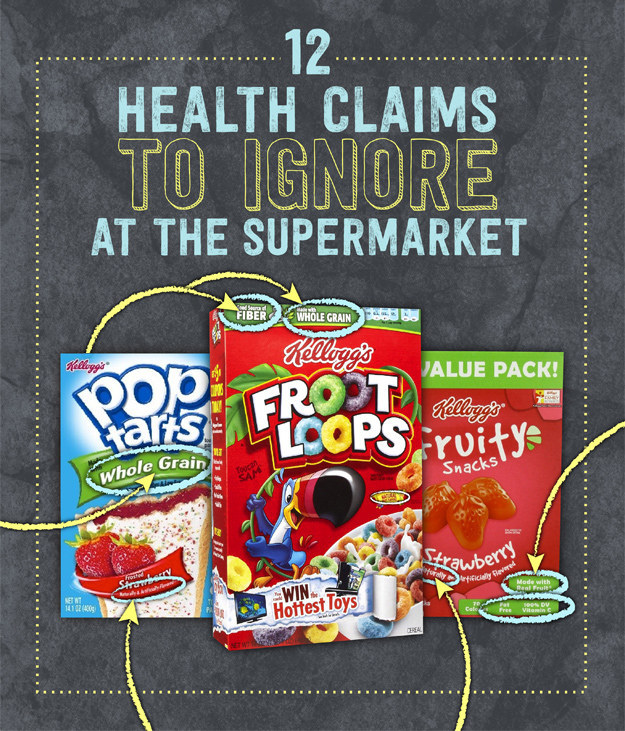
12 Ways Food Companies Pretend Your Snacks Are Healthy
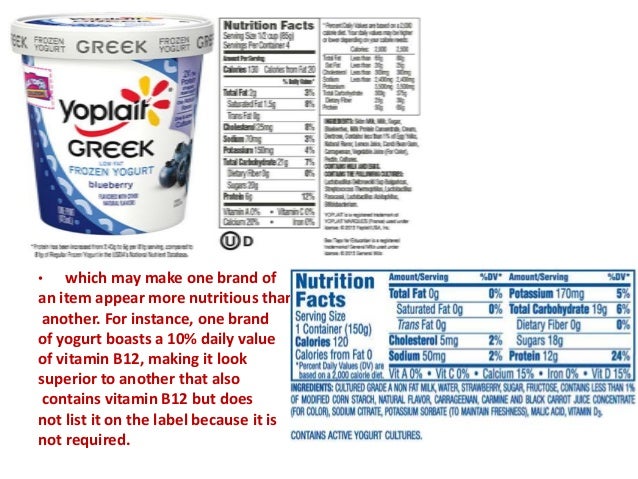
Interpret the reading of food labels and its
Post a Comment for "44 examples of nutrient claims on food labels"